Animal Farm: A Comprehensive Summary
Animal Farm, a satirical novella by George Orwell, details a farm revolution where animals overthrow humans, seeking equality, but succumb to a new tyranny.
Animal Farm, published in 1945, stands as George Orwell’s enduring allegorical novella, a deceptively simple tale brimming with profound political and social commentary. The narrative unfolds on Manor Farm, where the animals, burdened by the tyranny of their human owner, Mr. Jones, embark on a revolutionary quest for freedom and equality. Inspired by the visionary ideals of Old Major, a prize-winning boar, they successfully overthrow Jones and establish “Animal Farm,” governed by the principles of Animalism.
However, this initial utopia swiftly deteriorates as power struggles emerge amongst the animals, particularly between the intelligent pigs, Napoleon and Snowball. Orwell masterfully employs animal characters to represent various figures and factions involved in the Russian Revolution, crafting a biting satire on totalitarian regimes and the corrupting influence of power; The story serves as a cautionary fable, exploring themes of manipulation, propaganda, and the erosion of ideals, remaining remarkably relevant even today.
Historical Context and George Orwell
Animal Farm is deeply rooted in the historical context of the Russian Revolution of 1917 and the subsequent Stalinist era. George Orwell, a democratic socialist, was a staunch critic of totalitarianism in all its forms. Having witnessed the horrors of the Spanish Civil War, he became profoundly disillusioned with communist ideology and the betrayal of socialist principles.
Orwell began writing Animal Farm during World War II, facing difficulties in finding a publisher due to its anti-Soviet sentiments. The novel serves as an allegorical critique of the revolution’s descent into tyranny under Joseph Stalin. Characters and events directly mirror those of the Russian Revolution – Old Major representing Karl Marx and Vladimir Lenin, Napoleon embodying Stalin, and Snowball paralleling Leon Trotsky. Understanding this historical backdrop is crucial to fully appreciating the novel’s satirical power and Orwell’s warning against the dangers of unchecked power.
The Initial Rebellion and Old Major’s Dream
The story begins on Manor Farm, where the animals are oppressed by the cruel farmer, Mr. Jones. Old Major, a prize-winning boar, gathers the animals and shares a compelling dream of a world free from human control – a vision of equality and prosperity where animals govern themselves. This dream, fueled by resentment towards Jones’s mistreatment, plants the seeds of rebellion.
Old Major articulates the principles of Animalism, a philosophy advocating for animal liberation and the overthrow of human tyranny. He inspires the animals to unite against their oppressors, emphasizing their collective strength. Shortly after, Old Major dies, but his revolutionary ideas are carried forward by the pigs, Snowball and Napoleon, who begin to systematically prepare for the uprising that will transform Manor Farm into Animal Farm, initiating a new era.
Key Characters and Their Roles
Animal Farm features a cast of characters representing various figures from the Russian Revolution. Old Major embodies Karl Marx and Vladimir Lenin, inspiring the rebellion with his utopian vision. Napoleon, a cunning pig, mirrors Joseph Stalin, rising to dictatorial power through manipulation and force. Snowball, initially a leader alongside Napoleon, represents Leon Trotsky, advocating for modernization and ultimately exiled.

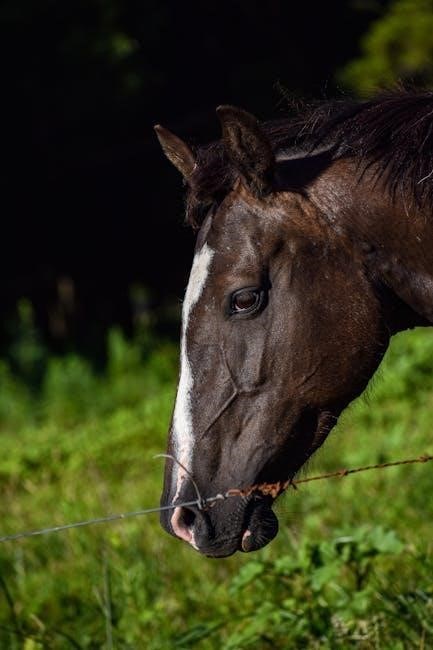
Squealer, the propagandist, skillfully distorts the truth to maintain Napoleon’s control, echoing the role of Soviet propaganda. Boxer, the loyal and hardworking horse, symbolizes the dedicated, yet exploited, working class. Mr. Jones, the farmer, represents the overthrown Tsar Nicholas II. These characters, through their actions and allegorical representations, drive the narrative and expose the dangers of unchecked power.
Napoleon: The Rise to Power
Napoleon, the Berkshire boar, strategically consolidates power on Animal Farm through ruthless tactics. Initially appearing as a quiet presence, he subtly undermines Snowball’s influence, utilizing Squealer’s propaganda to discredit his rival. The expulsion of Snowball, framed as a traitor, marks a pivotal moment in Napoleon’s ascent.
He then employs the fierce dogs, raised in secret, as his personal enforcers, suppressing dissent and eliminating opposition. By rewriting history and manipulating the Seven Commandments, Napoleon establishes a totalitarian regime. His control extends to all aspects of farm life, exploiting the animals’ labor for his own benefit and the pigs’ increasing luxury, mirroring Stalin’s rise in the Soviet Union.
Snowball: The Idealistic Leader
Snowball, a bright and articulate pig, emerges as a key figure in the early days of Animal Farm, championing the principles of Animalism and striving for a more equitable society. He dedicates himself to improving the farm’s efficiency, notably devising plans for the windmill – a symbol of progress and a reduced workload for all animals.
Snowball’s vision includes literacy programs and committees to enhance animal welfare, demonstrating genuine concern for the collective good. However, his progressive ideas and popularity threaten Napoleon’s ambition, leading to a smear campaign orchestrated by Squealer. Ultimately, Snowball is unjustly exiled, falsely branded a traitor, and becomes a scapegoat for all the farm’s misfortunes, representing Trotsky’s fate.
Squealer: The Master Propagandist
Squealer, a porker with a silver tongue, serves as Napoleon’s chief propagandist, skillfully manipulating language and distorting facts to control the narrative on Animal Farm. He expertly justifies Napoleon’s actions, rewriting history and convincing the other animals that their lives are improving, even as conditions worsen.
Squealer’s persuasive rhetoric and ability to present lies as truth are instrumental in maintaining the pigs’ power. He utilizes fear and intimidation, silencing dissent and quashing any questioning of Napoleon’s authority. Through carefully crafted speeches and statistical “proofs,” Squealer ensures the animals remain compliant and ignorant of the pigs’ growing corruption, embodying the power of propaganda in totalitarian regimes.

Boxer: The Loyal Workhorse
Boxer, the steadfast and immensely strong carthorse, represents the dedicated, working-class citizens exploited by totalitarian regimes in Animal Farm. His unwavering loyalty and tireless work ethic are initially vital to the farm’s success, consistently proclaiming “I will work harder!” despite deteriorating conditions.
Boxer’s simple-minded devotion and inability to critically analyze situations make him easily manipulated by the pigs. He embodies blind faith and unquestioning obedience, tragically accepting the pigs’ justifications for their actions. Ultimately, Boxer’s strength is exploited until he is no longer useful, highlighting the callous disregard for individual well-being in pursuit of power, and his fate serves as a poignant symbol of betrayal.
The Seven Commandments and Animalism
Animalism, the farm’s governing ideology, is distilled into the Seven Commandments, initially intended to ensure equality and prevent the animals from falling back into human-like habits. These principles, prominently displayed, begin with “All animals are equal,” and aim to establish a utopian society free from oppression.
However, as the pigs gain control, the commandments are subtly altered to justify their increasing privileges and consolidate their power. These revisions, often performed under the cover of darkness, demonstrate the insidious nature of propaganda and the manipulation of principles for self-serving purposes. The gradual distortion of the Seven Commandments symbolizes the corruption of the revolution’s original ideals, ultimately revealing the pigs’ hypocrisy and betrayal of Animalism’s core tenets.
The Early Days of Animal Farm

Following the successful rebellion against Mr. Jones, the animals enthusiastically embrace their newfound freedom and rename the farm “Animal Farm.” Initial days are marked by a sense of collective purpose and hard work, as the animals attempt to manage the farm themselves. They harvest crops, organize their time, and strive to uphold the principles of Animalism, believing in a future of equality and prosperity.
Despite their initial enthusiasm, challenges quickly emerge. The animals lack the knowledge and skills necessary for efficient farm management, and disagreements arise regarding leadership and decision-making. Snowball and Napoleon, two prominent pigs, quickly vie for control, setting the stage for a power struggle that will ultimately define the farm’s future.
The Gradual Erosion of Equality
Initially founded on principles of equality, Animal Farm witnesses a subtle but persistent erosion of these ideals. The pigs, possessing superior intelligence, gradually assume positions of leadership and control, justifying their dominance as necessary for the farm’s efficient operation. Privileges begin to accumulate for the pigs, such as enjoying extra food, sleeping in beds, and altering the Seven Commandments to suit their needs.
Other animals, like Boxer, remain blindly devoted to the farm and its leadership, accepting the pigs’ decisions without question. This unquestioning loyalty allows the pigs to exploit the other animals’ labor and manipulate them through propaganda disseminated by Squealer. The initial vision of a utopian society slowly transforms into a hierarchical structure mirroring the oppression they initially rebelled against.
Napoleon’s Consolidation of Power
Napoleon, through calculated maneuvers and ruthless tactics, systematically consolidates his power on Animal Farm. He eliminates his rival, Snowball, framing him as a traitor and utilizing propaganda to demonize him in the eyes of the other animals. This removal of opposition allows Napoleon to seize complete control, establishing himself as the supreme leader.
He employs fear and intimidation, utilizing his trained guard dogs to suppress dissent and enforce obedience. Squealer’s skillful manipulation of language and historical revisionism further solidifies Napoleon’s authority, convincing the animals that their current circumstances are preferable to the past. The pigs gradually rewrite history, altering the Seven Commandments and controlling the narrative to maintain their dominance and justify their actions.
The Windmill Project and Its Significance
The windmill project, initially proposed by Snowball, becomes a central symbol of ambition and progress on Animal Farm, though ultimately represents Napoleon’s manipulative control. After Snowball’s expulsion, Napoleon appropriates the idea, presenting it as his own and rallying the animals with promises of a reduced workload and improved living conditions through its generated electricity.
However, the windmill’s construction is fraught with hardship and setbacks, largely due to the animals’ lack of expertise and Napoleon’s prioritization of his own comfort. Its repeated collapses, often blamed on Snowball’s sabotage, serve as convenient excuses for increased labor and dwindling rations. The windmill, therefore, embodies the pigs’ deceptive promises and the animals’ unwavering, yet exploited, faith in their leadership.
Manipulation of History and Propaganda
Squealer, Napoleon’s chief propagandist, masterfully rewrites history to legitimize the pigs’ increasingly authoritarian rule on Animal Farm. He skillfully distorts events, particularly Snowball’s role in the rebellion and the Battle of the Cowshed, portraying him as a traitor and a villain. This constant revisionism ensures the animals remain ignorant of the pigs’ self-serving actions and maintain their loyalty.

Propaganda permeates every aspect of farm life, with slogans like “Four legs good, two legs bad” simplifying complex issues and suppressing critical thought. The Seven Commandments are subtly altered to justify the pigs’ privileges, demonstrating how language can be weaponized to control perception. Through relentless manipulation, the pigs create a distorted reality where their power appears justified and any dissent is labeled as counter-revolutionary.
The Exploitation of the Animals
Despite the initial ideals of Animalism, the animals on the farm quickly find themselves subjected to a new form of exploitation, arguably worse than under Mr. Jones. The pigs, led by Napoleon, systematically exploit the labor of the other animals, particularly Boxer, for their own benefit. Boxer’s unwavering dedication and immense strength are relentlessly utilized, with little regard for his well-being.
Food rations are drastically reduced for all animals except the pigs, who live in luxury. The pigs manipulate the animals’ sense of duty and loyalty, convincing them that their sacrifices are necessary for the greater good of Animal Farm. This exploitation extends beyond physical labor; the animals’ intellectual freedom is suppressed through propaganda and the rewriting of history, ensuring their continued subservience.

The Transformation of the Pigs
Throughout the novel, the pigs undergo a disturbing transformation, gradually adopting the very behaviors they initially condemned in Mr. Jones. They begin by indulging in luxuries – milk, apples, and eventually, alcohol – justifying these privileges as necessary for their leadership roles. This marks a clear deviation from the principles of equality enshrined in Animalism.
Physically, the pigs become increasingly indistinguishable from humans, walking on two legs, wearing clothes, and carrying whips. This symbolic shift represents their complete embrace of the power and corruption they once opposed. Their language also evolves, becoming more complex and manipulative, used to control and deceive the other animals. Ultimately, the pigs become the oppressors they swore to overthrow, demonstrating the cyclical nature of power and corruption.
The Final Scene and the Loss of Ideals
The novel culminates in a chilling scene where the other animals, peering through the farmhouse window, can no longer distinguish the pigs from the humans. This visual representation symbolizes the complete betrayal of the original revolutionary ideals. The pigs have fully embraced the vices and behaviors of their former oppressors, becoming indistinguishable from them in both appearance and conduct.
The animals’ initial hopes for a utopian society based on equality and freedom are utterly shattered. The seven commandments have been altered to suit the pigs’ needs, culminating in the cynical revision: “All animals are equal, but some animals are more equal than others.” This final, ironic statement encapsulates the complete corruption of Animalism and the tragic loss of the revolution’s original promise.
Animal Farm as an Allegory for the Russian Revolution
Animal Farm functions as a powerful allegory for the Russian Revolution of 1917 and the subsequent Stalinist era. Old Major represents Karl Marx and Vladimir Lenin, inspiring the rebellion with his vision of a classless society. Napoleon embodies Joseph Stalin, the ruthless dictator who consolidates power through manipulation and violence. Snowball parallels Leon Trotsky, the intellectual leader exiled and demonized by Stalin.
The pigs’ gradual takeover mirrors the Bolsheviks’ rise to power, and their exploitation of the other animals reflects the oppression experienced by the Soviet populace. The windmill symbolizes the ambitious, yet ultimately flawed, industrialization projects of the Soviet Union. Orwell’s novella serves as a cautionary tale about the dangers of totalitarianism and the corruption of revolutionary ideals, highlighting how power can distort even the noblest intentions.
Themes of Power, Corruption, and Social Inequality
Animal Farm profoundly explores the corrupting influence of power and the cyclical nature of social inequality. Initially driven by ideals of equality and liberation, the farm descends into a new form of oppression under the pigs’ rule. The novel demonstrates how easily revolutionary principles can be betrayed when those in power prioritize self-interest over collective welfare.
Orwell illustrates how propaganda, manipulation, and control of information are used to maintain dominance and suppress dissent. The animals’ gradual acceptance of the pigs’ authority highlights the dangers of blind faith and the importance of critical thinking. Ultimately, Animal Farm serves as a stark warning against the abuse of power and the enduring struggle for a truly just and equitable society.

Availability of Animal Farm PDF Summaries and Resources
Numerous online resources offer Animal Farm summaries in PDF format, catering to students and readers seeking concise overviews of George Orwell’s allegorical novella. CliffsNotes provides detailed chapter summaries, character analyses, and quote explanations, readily available online. SparkNotes and other literary websites also present comprehensive study guides, often downloadable as PDFs.
These resources are invaluable for homework help, essay preparation, and a deeper understanding of the novel’s complex themes. Many educational platforms and libraries offer access to digital copies of Animal Farm itself, alongside supplementary materials. Searching “Animal Farm summary PDF” yields a wealth of options, ensuring accessibility for diverse learning preferences and needs.